





Reproductive Health: Teen Pregnancy
About Teen Pregnancy
In 2017, a total of 194,377 babies were born to women aged 15–19 years, for a birth rate of 18.8 per 1,000 women in this age group. This is another record low for U.S. teens and a drop of 7% from 2016.1 Birth rates fell 10% for women aged 15–17 years and 6% for women aged 18–19 years.2
Although reasons for the declines are not totally clear, evidence suggests these declines are due to more teens abstaining from sexual activity, and more teens who are sexually active using birth control than in previous years.3, 4
Still, the U.S. teen pregnancy rate is substantially higher than in other western industrialized nations5, and racial/ethnic and geographic disparities in teen birth rates persist.6
Disparities in Teen Birth Rates
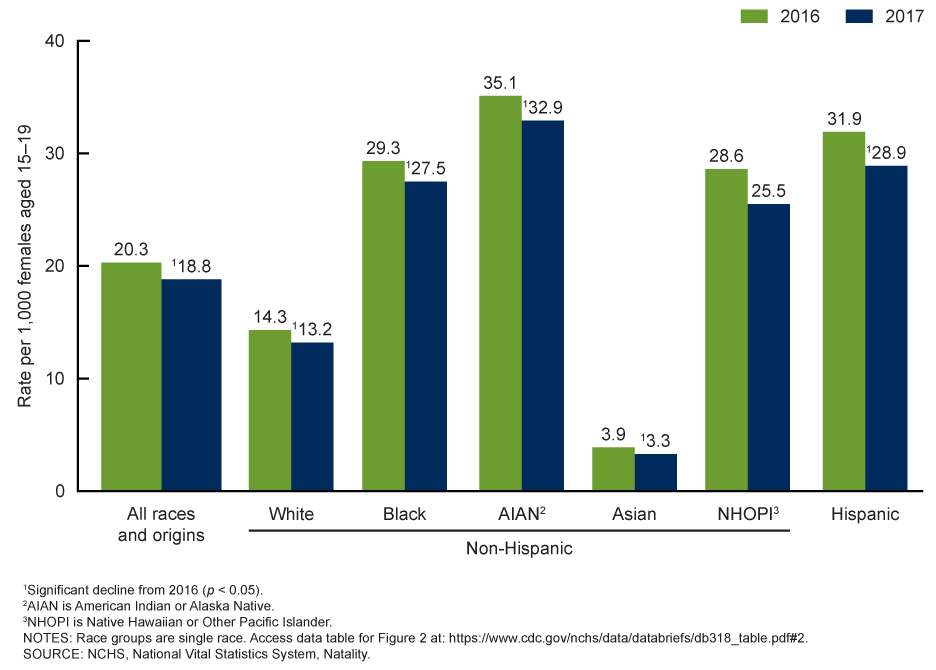
Teen birth rates declined from 2016 to 2017 for most racial groups and for Hispanics.2 Among 15- to 19-year-olds, teen birth rates decreased:
- 15% for non-Hispanic Asians
- 9% for Hispanics
- 8% for non-Hispanic whites
- 6% for non-Hispanic blacks
- 6% for American Indian/Alaska Natives (AI/AN)1
In 2017, the birth rates of Hispanic teens (28.9) and non-Hispanic black teens (27.5) were more than two times higher than the rate for non-Hispanic white teens (13.2). The birth rate of American Indian/Alaska Native teens (32.9) was highest among all race/ethnicities.1 Geographic differences in teen birth rates persist, both within and across states. Among some states with low overall teen birth rates, some counties have high teen birth rates.6
Birth rates for females aged 15-19, by race and Hispanic origin of mother: United States, 2016 and 2017
Less favorable socioeconomic conditions, such as low education and low income levels of a teen’s family, may contribute to high teen birth rates.7 Teens in child welfare systems are at higher risk of teen pregnancy and birth than other groups. For example, young women living in foster care are more than twice as likely to become pregnant than those not in foster care.8
To improve the life opportunities of adolescents facing significant health disparities and to have the greatest impact on overall U.S. teen birth rates, CDC uses data to inform and direct interventions and resources to areas with the greatest need.

The Importance of Prevention
Teen pregnancy and childbearing bring substantial social and economic costs through immediate and long-term impacts on teen parents and their children.
- Pregnancy and birth are significant contributors to high school dropout rates among girls. Only about 50% of teen mothers receive a high school diploma by 22 years of age, whereas approximately 90% of women who do not give birth during adolescence graduate from high school.10
- The children of teenage mothers are more likely to have lower school achievement and to drop out of high school, have more health problems, be incarcerated at some time during adolescence, give birth as a teenager, and face unemployment as a young adult.11
- On a positive note, between 1991 and 2015, the teen birth rate dropped 64%, which resulted in $4.4 billion in public savings in 2015 alone.12

Evidence-based teen pregnancy prevention programs have been identified by the US Department of Health and Human Services (HHS) TPP Evidence ReviewExternal , which used a systematic process for reviewing evaluation studies against a rigorous standard. Currently, the Evidence Review covers a variety of diverse programs, including sexuality education programs, youth development programs, abstinence education programs, clinic-based programs, and programs specifically designed for diverse populations and settings. In addition to evidence-based prevention programs, teens need access to youth-friendly contraceptive and reproductive health services and support from parents and other trusted adults, who can play an important role in helping teens make healthy choices about relationships, sex, and birth control. Efforts at the community level that address social and economic factors associated with teen pregnancy also play a critical role in addressing racial/ethnic and geographical disparities observed in teen births in the US.
 icons on the left to see existing comments.
0 General Document comments
0 Sentence and Paragraph comments
0 Image and Video comments
General Document Comments 0

